REMA coREMA grants
Cooperation between REMA members for a more sustainable and inclusive early music sector.
REMA is launching the first coREMA grants – a funding scheme designed to support collaborative projects between REMA members.
The aim is to strengthen international cooperation within our network by encouraging projects that link organisations from different branches of the early music sector and work together towards greater ecological, financial and social sustainability, while promoting inclusion and representation.

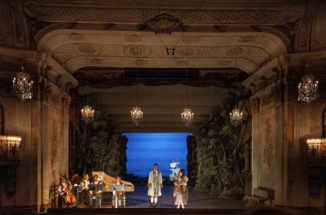
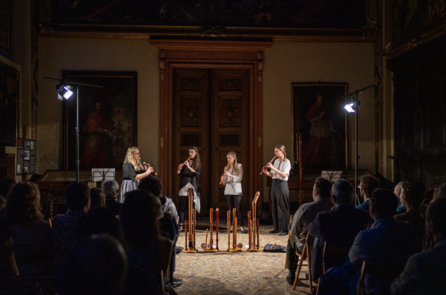
Through the coREMA grants, REMA will award €5,000 per project to support collaborative initiatives between at least two REMA members from different branches of the early music sector (ensembles, festivals, labels, research centres, conservatoires, etc.), ideally based in different countries. Up to six projects will be funded each year.
Projects may be entirely new initiatives or an additional component to an existing project that incorporates one of the priority dimensions below. One of the selection criteria will be the project’s potential to inspire other REMA members, offering ideas, approaches, or models that can motivate further action across the sector.
Projects must address at least one of the priority themes:
- Transition to Green Practices: For projects that creatively address today’s ecological challenges and propose innovative ways to embed sustainable practices in the early music sector.
- Cooperation for a Sustainable Sector: For cooperation projects involving early music organisations from different branches of the field, designing new models for the remuneration of professionals or for funding the sector, and promoting a long-term sustainable vision of early music activities.
- Inclusion and Representation: For projects that aim to strengthen inclusion and representation at any level of the project, whether in its design, participants, audiences, or governance.
Timeline:
Call opening – 1 October of each year
Deadline – 5 February
Selection – 20 February
Project to take place before 31 January 2029
2026 Laureates
1. Pneuma: The Sound of Fire — Early Music Concerts Adapted for Sensitive Audiences
Theme: Inclusion and Representation
Theme: Inclusion and Representation
Led by three complementary organisations, Phaedrus, Espurnes Barroques Festival and Early Music Sweden, the project places accessibility at the heart of its artistic and organisational design, rather than as a retrospective adjustment. Their collaboration brings together artistic, pedagogical, and territorial expertise to develop an innovative model designed to be reproducible at a European scale, particularly within the REMA network.
The project directly addresses inclusion by targeting neurodivergent audiences (people living with autism, ADHD, anxiety, PTSD, obsessive-compulsive disorders, or sensory processing disorders), as well as their relatives and carers. Often excluded from traditional concert formats, which are frequently ill-suited to their sensory and cognitive needs, these audiences are central to the approach. By rethinking the entire concert experience — including audience preparation, team training, spatial adaptations (quiet zones, simplified signage, lighting), provision of sensory tools, and musical adjustments (volume, variety, rhythms) — Pneuma aims to remove structural barriers.
Beyond these adaptations, the project questions the implicit norms of classical music concerts, challenging the assumption that these formats are already naturally accessible. It creates a vital space for dialogue on inclusive practices in the cultural sector, while contributing to evolving perceptions of so-called “excluded” audiences.
Finally, Pneuma is designed for dissemination and sustainability: the creation of a methodological guide and toolkit will allow other organisations to adopt these practices. The project thus goes beyond its initial scope to generate long-term impact and promote better representation of diversity within early music audiences.
2. Early Modern Repertoire Database Cooperation
Theme: Cooperation for a Sustainable Sector
2. Early Modern Repertoire Database Cooperation
Theme: Cooperation for a Sustainable Sector
Led by ReRenaissance, Ricercar Lab and the Schola Cantorum Basiliensis, this project addresses a structural challenge in the early music sector: the fragmentation of resources dedicated to Renaissance repertoire.
For decades, scholars, performers, and institutions have produced highly valuable materials (transcriptions, translations, commentary), but the absence of a shared digital infrastructure leaves them dispersed across private archives, obsolete databases, and hard-to-access publications. This leads to duplicated work, loss of quality, and limited visibility, weakening the sector in the long term.
By developing a shared online database, structured according to common standards and connected to the Ricercar Data Lab infrastructure, the project transforms isolated resources into a coherent, searchable, and expandable European network.
A pilot phase will establish the foundations of this cooperation: training in metadata standards, definition of shared protocols, and structuring of existing archives. Ultimately, the platform will provide centralised, reliable access to Renaissance repertoire, directly integrated into research, teaching, and artistic programming.
The project benefits a broad ecosystem (performers, ensembles, scholars, students, programmers) by improving the quality of available sources and reducing duplication. It also enhances audience experience by strengthening understanding of texts and musical context.
Based on balanced collaboration, where each partner retains autonomy while adopting shared standards, the project offers a reproducible model for other institutions.
3. The Whispering Dome: A Cooperative Model for Sustainable Early Music Practice
Theme: Cooperation for a Sustainable Sector
3. The Whispering Dome: A Cooperative Model for Sustainable Early Music Practice
Theme: Cooperation for a Sustainable Sector
Led by the Brighton Early Music Festival, The Music Summer School and Festival and The Whispering Dome, this project proposes a sustainable cooperation model addressing the challenges of the early music sector, which is often structured around isolated initiatives with limited continuity.
The project relies on close collaboration between a festival/summer school and an artistic ensemble, centring on a production linking early music with themes of migration, habitat preservation, and cultural exchange. It creates tangible bridges between professional artists, amateur musicians, young participants, and audiences, combining creation, teaching, and participation.
Structured in three phases — development (2026–early 2027), pilot (summer 2027), and dissemination (late 2027–2028) — the project designs, tests, and refines workshop formats, participatory performance, and adaptable educational resources. The pilot programme will include musical workshops, exploration of European and non-European repertoires, and a public performance involving participants and environmental sector partners.
Cooperation is central to the project and conceived as a balanced co-creation process: each partner contributes to design, implementation, and dissemination. The project also engages international environmental organisations to create new contexts for the work and strengthen connections between artistic practice and ecological awareness.
Designed from the outset as a transferable model, it relies on replicable formats (workshops, resources, participatory performance) adaptable to other repertoires, regions, and organisations. Already recognised with a REMA Award 2024, it provides a tested artistic basis that can inspire other network members. The dissemination of resources and a methodological guide will encourage wider adoption, while amateur musicians involved will extend the project locally.
Although developed in the UK, the project has an international scope through its partnerships and is designed for adaptation by REMA members in other countries, establishing a sustainable model based on shared resources, common methodologies, and fair remuneration practices.
4. Currents of Affects — A European Journey
Theme: Transition to Green Practices
4. Currents of Affects — A European Journey
Theme: Transition to Green Practices
Led by BarokkiKuopio, Sastamala Gregoriana, and the Fondazione ICONS (European Union Baroque Orchestra – EUBO), this project presents a sustainable artistic circulation model addressing ecological, economic, and structural challenges in early music.
In response to rising mobility costs and environmental impacts of international touring, the project implements a slow touring model, combining an intensive artistic residency with a geographically clustered concert series. Bringing the EUBO together for a residency at the Glasperlenspiel Music Festival in Estonia, followed by a flight-free tour to Finland, the project demonstrates that artistic quality, European cooperation, and ecological responsibility can be reconciled.
The intensive residency allows young musicians from different European countries to benefit from extensive rehearsal time, high-level artistic mentorship, and intercultural experience. Local anchoring is strengthened through concerts and outreach activities in Estonia and Finland, engaging diverse audiences and reinforcing early music as a shared European heritage.
Based on balanced cooperation, the model distributes resources, costs, and responsibilities among partners. Concentrating rehearsals in a single location, combined with an optimised tour, limits travel, making it possible for smaller festivals to host a large European ensemble.
By integrating residency, performance, and outreach into a coherent and eco-responsible format, Currents of Affects — A European Journey provides a concrete, reproducible model for sustainable touring while enhancing artistic circulation.
5. GEMF — Taiwan “España 400” (1626–2026)
Theme: Inclusion and Representation
5. GEMF — Taiwan “España 400” (1626–2026)
Theme: Inclusion and Representation
Led by Capella de Ministrers, Ensemble InAlto and the Gleam Ensemble, this project marks the 400ᵗʰ anniversary of early Spanish-Taiwanese contacts (1626–2026), exploring artistic and scholarly exchanges between Europe and Asia. It integrates Asian musical traditions, Iberian repertoire, and ritual practices into an international co-creation process.
Unlike touring-focused models, the project adopts a joint research-based approach, bringing together artists and scholars from Taiwan, Spain, Belgium, the Philippines, Korea, and Mexico to reconstruct plausible 17ᵗʰ-century Formosan soundscapes.
Central to the approach is addressing structural imbalances in international collaboration through equitable frameworks, intercultural dialogue, recognition of local traditions, and co-creation of programmes. This enables a critical, inclusive reflection beyond simplified colonial narratives.
Over three months, the project combines concerts, workshops, lectures, and hybrid forms, integrating music, dance, visual arts, and culinary heritage. Performances take place in Taiwan, followed by circulation in Europe, enhancing visibility for artists and repertoire in both contexts.
The project benefits a wide ecosystem (artists, researchers, students, audiences, local communities) by expanding access to new musical narratives and extending early music beyond European perspectives. It strengthens institutional links and opens new dissemination pathways in Asia.
Finally, GEMF — Taiwan “España 400” develops a transferable, sustainable model for transcontinental collaboration, including principles of governance, remuneration, and shared documentation.
6. MATER MISERICORDIAE
Theme: Inclusion and Representation
6. MATER MISERICORDIAE
Theme: Inclusion and Representation
Led by the Pérgamo Ensemble and the Korkyra Baroque Festival, with Canadian soprano Elisabeth Hetherington, this project offers an international micro-residency in Croatia, combining musical performance, workshops, and community engagement, while integrating notable accessibility through participation of a musician with reduced mobility.
The project includes two concerts in Croatia, workshops, open rehearsals, and exchanges with students and local cultural stakeholders. Community access initiatives, such as free tickets for local residents, are also included, along with a guide on good practices for musicians with specific mobility needs during tours.
The project directly benefits professional and student musicians, as well as local audiences, offering enriching artistic and educational experiences. It opens a space for dialogue on accessibility, tour sustainability, and international cooperation, while producing methodological resources that can inspire other festivals and ensembles in the REMA network.
MATER MISERICORDIAE demonstrates how inclusion, representation, and cooperation can come together to create a reproducible, sustainable model for international musical practice, integrating social engagement and accessibility.
Rema
participate
Conferences, awards, events ... participate in REMA’s activities throughout the year!