Il Trionfo del Tempo e del Disinganno
20 May/20h00 France / Rennes
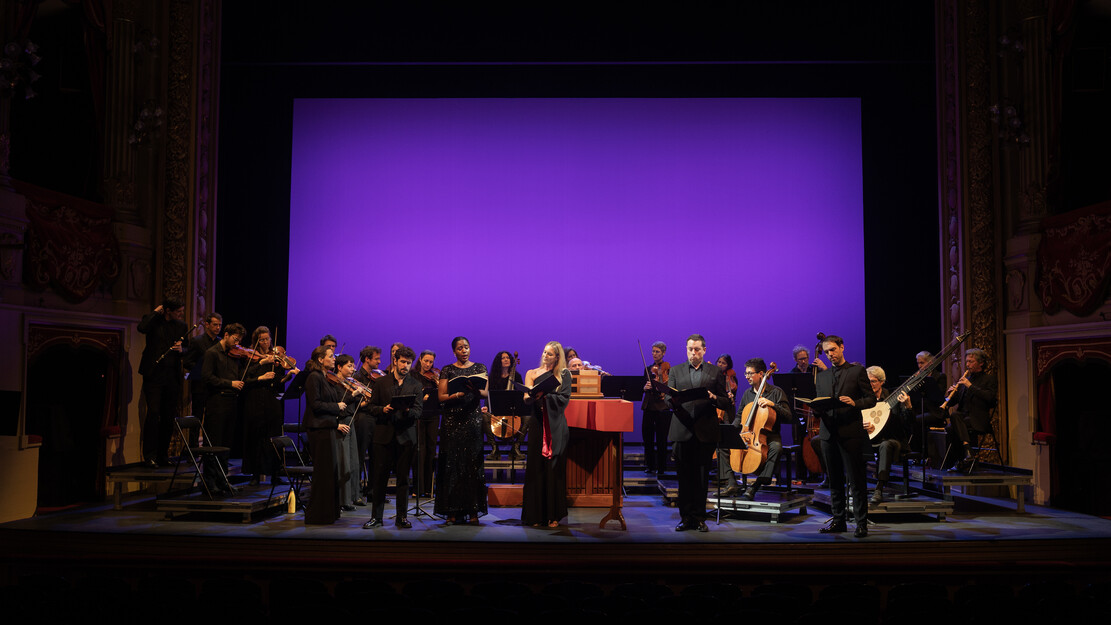
Following a memorable Resurrection in 2024-2025, Le Banquet Céleste continues its cycle dedicated to Handel's oratorios with this breathtakingly beautiful score.
Alongside the performers of Le Banquet Céleste, an exceptional cast, including Catherine Trottmann, Blandine de Sansal, Rémy Brès-Feuillet, and Thomas Hobbs, embodies these four characters, conducted by Simon Proust, guest conductor and winner of the 2025 Victoires de la Musique award.
Together, they bring to life Handel's life's work, a score he revised until his death in pursuit of perfection. A secular oratorio, akin to opera in its theatricality, it explores life choices, balancing carefree abandon in the face of time's passage, immediate pleasures, and renunciation.
An opportunity to celebrate 10 years of residency of Le Banquet Céleste at the Rennes Opera.
Alongside the performers of Le Banquet Céleste, an exceptional cast, including Catherine Trottmann, Blandine de Sansal, Rémy Brès-Feuillet, and Thomas Hobbs, embodies these four characters, conducted by Simon Proust, guest conductor and winner of the 2025 Victoires de la Musique award.
Together, they bring to life Handel's life's work, a score he revised until his death in pursuit of perfection. A secular oratorio, akin to opera in its theatricality, it explores life choices, balancing carefree abandon in the face of time's passage, immediate pleasures, and renunciation.
An opportunity to celebrate 10 years of residency of Le Banquet Céleste at the Rennes Opera.